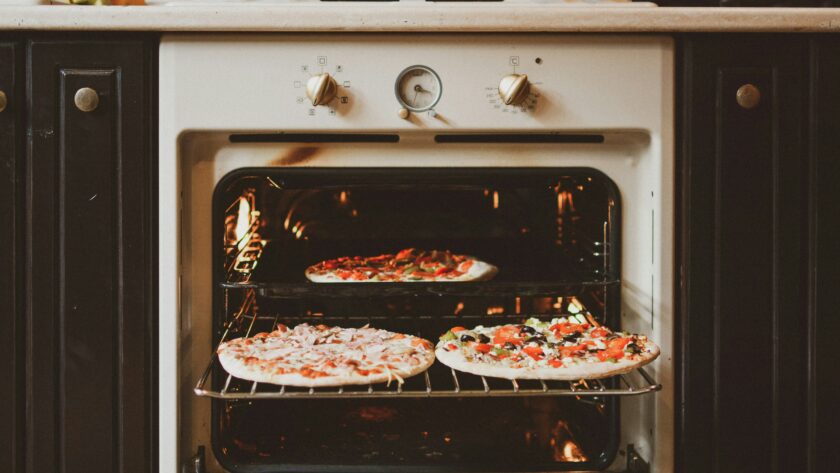
Most home ovens top out around 500–550°F, while professional pizza ovens push 700–900°F. That difference explains why your pizza crust at home may stay pale, soft, or soggy.
The good news: you don’t need a wood-fired setup to get closer to pizzeria results. With a few adjustments and the right tools, you can squeeze far more heat out of your oven and bake pizzas that look and taste like the real thing. Here’s how to do it:
1. Preheat Longer Than You Think
When your oven beeps “ready” after 15 minutes, it’s lying. That’s the air temperature, not the actual heat stored in the oven walls, racks, and baking surface.
- Give your oven at least 45–60 minutes of preheating before baking pizza.
- This ensures your steel, stone, or pan is saturated with heat, ready to transfer energy directly to your dough.
- Use an inexpensive infrared thermometer to confirm your baking surface has reached 500°F or higher.
👉 Tip: A long preheat is the single easiest change you can make for crispier pizza.
2. Use a Baking Steel for Intense Bottom Heat
A baking stone helps, but a baking steel is a game-changer. Steel is 18 times more conductive than ceramic, which means it dumps heat into your dough faster — giving you a crisp, blistered crust before your toppings overcook.
- Place your steel on the middle or lower rack of the oven.
- Preheat it for the full 45–60 minutes.
- Slide your pizza directly onto the steel for maximum contact.
Compared to stones, steels rarely crack, last forever, and double as griddles.
👉 See my picks: Baking Steels & Stones →
3. Maximize Heat Transfer with Placement
Where you bake in the oven matters. Too high, and the crust stays soft while the cheese scorches. Too low, and the pizza can dry before it browns.
For most home ovens:
- Bake on the middle rack with a steel for balanced heat top and bottom.
- If your crust is browning too slowly, move the steel down one rack position.
- If your toppings lag behind, move it one level higher.
Think of it as dialing in balance: you want crust and toppings to finish at the same time.
4. Finish Under the Broiler
Even with a fully preheated oven, you may still miss the top-down intensity of a pizza oven. The solution: finish your pizza under the broiler.
- Bake on the steel until the crust is almost done.
- Switch on the broiler and move the pizza to the top rack for the last 1–2 minutes.
- Watch closely — the broiler can go from “perfect char” to “burned” fast.
This technique mimics the domed flames of a wood-fired oven, giving you leopard spots and bubbly cheese.
5. Choose the Right Pan for the Job
If you’re baking pan pizza; Detroit, Sicilian, or Grandma; the pan itself makes a huge difference.
- Heavy steel or anodized aluminum pans hold and radiate heat, creating crispy, caramelized edges.
- Cheap, thin pans cool down quickly and produce pale, soggy crusts.
- For Detroit-style, go for blue steel pans. For Sicilian, a heavy rectangular sheet pan works well.
👉 See my recommendations: Pizza Pans & Accessories →
Quick Recap
- Preheat longer: 45–60 minutes, no shortcuts.
- Baking steel > stone: better conductivity, crispier crust.
- Placement matters: adjust rack position for balance.
- Broiler finish: char and melt like a pro.
- Use the right pan: weight = crispness.
With these tweaks, your “regular” oven can start turning out pizzas that rival your favorite pizzerias.
Keep Improving Your Pizza
👉 More fixes: Pizza Making Techniques & Troubleshooting Hub →
🔧 Gear that makes the biggest difference: Pizza Tools Hub →
📖 For pizza stories and traditions: PizzaPedia →